

26 September 2026
Light-Activated Bleaching: Is It Really More Effective?
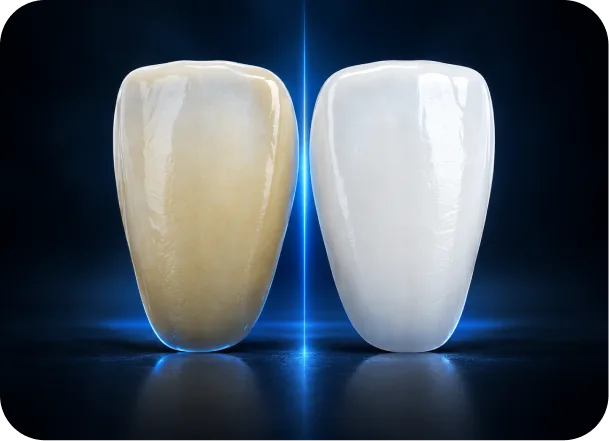
In-office whitening is often marketed with a curing light or LED lamp that is said to “activate” the bleaching gel. The idea is that light speeds up the breakdown of hydrogen peroxide into the free radicals that lighten stained enamel and dentin.
Clinical comparisons have generally found that, once a sufficiently concentrated gel is used, adding light makes little lasting difference to the final shade. Any early advantage tends to fade within weeks, partly because the light also dehydrates teeth and makes them look temporarily whiter. Heat from some lamps can also increase post-operative sensitivity.
The factors that matter most are gel concentration, contact time, correct isolation of the soft tissues and a realistic diagnosis of the stain. Light activation can still be part of a protocol, but patients should understand that the chemistry, not the lamp, does most of the work.